:::::::::::::::::::::::::::::::::::::::::::::::::::::::::::::::::::::::::::::::::::::::::::::::::::::
PHILIPPINES SAIJIKI
:::::::::::::::::::::::::::::::::::::::::::::::::::::::::::::::::::::::::::::::::::::::::::::::::::::
Sugarcane, sugar cane
***** Location: Philippines, others see below
***** Season: Various, see below
***** Category: Plant
*****************************
Explanation
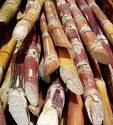
Sugarcane or Sugar cane (Saccharum) is a genus of 6 to 37 species (depending on taxonomic interpretation) of tall perennial grasses (family Poaceae, tribe Andropogoneae), native to warm temperate to tropical regions of the Old World. They have stout, jointed, fibrous stalks that are rich in sugar and measure 2 to 6 meters tall. All of the sugarcane species interbreed, and the major commercial cultivars are complex hybrids.
© More in the WIKIPEDIA !
Zuckerrohr
:::::::::::::::::::::::::::::::::::::::::::::::::::::::::::::::::::::::::::::::::::::::::::::::::::::
The Checkered Origins of the Sugar Industry
The history of sugar production is intricately linked to the evolution of two rather unsavory reflections of man's inhumanity to man, those being colonialism and slavery. Early European settlers in the Caribbean soon began planting sugar cane and building sugar mills to process the output. Sugar cane is a delicate plant, and there was always a need for plenty of fertilizer, irrigation, and a workforce that would work long hard hours of backbreaking labor without complaint - or without choice, as in the case of slaves. The colonialists brought almost 12 million West Africans to the Caribbean in chains in the holds of slave ships during the four and half centuries between 1450 and 1900.
The early sugar business was defined by the notorious "triangular trade." Sugar from the Caribbean was taken to England for refining and rum production. Cloth, firearms, and rum were in turn shipped down to West Africa as capital for the slave trade. The slave ships then took their degraded human cargo to places like Haiti and Barbados to exchange them for yet more sugar.
The Case of Negros Occidental
Although there was never a slave trade in the Philippines, the sugar industry here has its own unique history of exploitation, excitement, and human drama. Nowhere is that story better illustrated than in the province of Negros Occidental, located between Panay and Cebu in the Visayas.
The Spanish crews who first surveyed the island coined the term Negros Occidental because of the dark-skinned people they saw. The ethnic mix changed substantially in the intervening centuries as a result of the complex intermarriage among natives, Spanish, and Chinese. Indeed, Negrenses are known for their fair skin and mestizo traditions.
By the early 1900s, the Philippines sugar industry was well established. The American colonialists played a key role in boosting the industry in the form of the Payne-Aldrich Act (1909). This important law created a tariff wall that guaranteed easy export of sugar to the states at prices held artificially well above world norms. It also created a situation in which the gap between rich and poor grew even greater, and ensured that there would be little economic incentive for modernization.
Read the full story HERE
© Clarence Henderson, 2000
*****************************
Worldwide use
India
kigo for winter
Fresh sugar cane
:::::::::::::::::::::::::::::::::::::::::::::::::::::::::::::::::::::::::::::::::::::::::::::::::::::
Japan
Sugar cane (sugarcaneI is mostly produced in Okinawa.
Flower of the sugar cane, satookibi no hana
砂糖黍の花(さとうきびのはな)
kigo for mid-winter
..... kanshoo no hana 甘蔗の花 (かんしょのはな)

sugar cane, satoo kibi, satookibi 甘蔗 (さとうきび)
kigo for mid-autumn


kansho kari 甘蔗刈 (かんしょかり) harvesting sugar cane
... kibi kari 甘蔗刈(きびかり)
kigo for mid-winter
. WASHOKU
Wasanbon, Wasambon 和三盆 sugar bamboo
Zuckerbambus
Sugar cane from Kagoshima
Saccharum officinarum. Zuckerrohr
:::::::::::::::::::::::::::::::::::::::::::::::::::::::::::::::::::::::::::::::::::::::::::::::::::::
Kenya
Sugarcane in Kenya is a topic
since it is there all year round; however, sugarcane harvesting could be a great kigo, especially in Western Kenya and Nyanza, where it is grown on a commercially large scale. It reaches harvesting age and ready to be converted into sugar at eighteen months. It is in this region of Western Kenya that the largest sugar-producing factories such as Mumias, Awendo, Nzoia, Chemelil and Sony exist.
Sugarcane is also chewed raw by most Kenyans.
In Nairobi City, you find very fine sugarcane for chewing having been brought in all the way fom Kisii. Kisii produces the best sugarcane for chewing. There is a difference between the sugarcane for sugar production and that for chewing. I once made a mistake about the two which I have not quite forgotten.
When we were high school students, a friend of mine once took me to Nzioa on a visit to his aunt's. I was mesmerized by acrage upon acrage of sugarcane plantantation and could not wait to settle down before I asked for it. Little did I know that the sugarcane growing community allowed visitors to learn the hard way how to differentiate between the two types of sugarcane; they brought me a whole bundle of this stuff and allowed me to chew to my fullest. By the following day, I could not eat or chew anything, as both sides of my inner cheeks were riddled with minute wounds! Sugar-producing sugarcane have minute needle-like fibre that pierces your mouth as you chew. I think it is the natural way of this sugarcane to prohibit man from chewing it so it can only produce sugar!
Patrick Wafula, May 2010
quote
There are 3 sugar belts in Kenya, namely the Nyando, the western sugar belt and the south Nyanza sugar zone. Sugar is the 2nd largest contributor to Kenya’s agricultural growth after tea.
The area under cane is 123,622 hectares of which 111,189 ha is farmed by smallholders and 12,433 under nucleus estates. Kenya’s annual production ranges from 400,000 - 500,000 metric tons. In 2006 Kenya produced 475,670 tons of sugar. This does meet the country’s annual demand and consequently sugar is imported. In July 2008 the Kenyan government cancelled the licences of all its 55 sugar importers saying they had misused them, evaded taxes and that their imports were hurting local farmers.
Kenya has been allowed to set a limit of 200,000 tons of sugar that can be imported tax-free under rules of trade in the 19-member Common Markets for Eastern and Southern Africa economic bloc.
MORE is here :
source : www.mbendi.com
- Nzoia Sugar Company
Sugar Factory--
the scent of roasting
sugar in the air
squashed
sugar canes on the road--
Nzoia sugar company
Patrick Wafula, 2014
- reference - Nzoia Sugar Company -
.................................................................................
chilly morning-
a drop of water falls from a broad
leaved sugarcane
Rodgers Nzomo
ruthless terminator-
a great inferno swallows a
sugarcane plantation
Ceciliah Wambui
Kenya Saijiki Forum
:::::::::::::::::::::::::::::::::::::::::::::::::::::::::::::::::::::::::::::::::::::::::::::::::::::
USA, TEXAS
kigo for winter
Sugarcane in Texas
In Texas the sugarcane is harvested October through January.
The sugarcane industry in Texas is located in the Lower Rio Grande Valley (LRGV) in the counties of Cameron, Hidalgo, and Willacy, and is the fourth largest source of U.S. sugarcane. Sugarcane is produced on 43,000 acres, with 1.5 million tons harvested annually. Sugarcane growers in Texas organized the Rio Grande Valley Sugar Growers, Inc. as a farmer-owned cooperative. Approximately 140 farmers grow sugarcane today.
Read more facts HERE
© www.ipmcenters.org
*****************************
Things found on the way
*****************************
HAIKU
Sugarcane
from the grindstone -
a sweet harvest.
Wilfredo R. Bongcaron, Manila 2008
:::::::::::::::::::::::::::::::::::::::::::::::::::::::::::::::::::::::::::::::::::::::::::::::::::::
*****************************
Related words
***** PHILIPPINES SAIJIKI
[ . BACK to WORLDKIGO . TOP . ]
:::::::::::::::::::::::::::::::::::::::::::::::::::::::::::::::::::::::::::::::::::::::::::::::::::::


 Posts
Posts


No comments:
Post a Comment