:::::::::::::::::::::::::::::::::::::::::::::::::::::::::::::::::::::::::::::::::::::::::::::::::::::::::::::::
.................... AUSTRALIA SAIJIKI
A
ustralia Saijiki
:::::::::::::::::::::::::::::::::::::::::::::::::::::::::::::::::::::::::::::::::::::::::::::::::::::::::::::::
This saijiki is under construction.
Dear Haiku poets from the region,
please help with your positive support, info and contributions!
It is difficult to re-plant the Japanese kigo concept in areas that have different seasonal aspects and no "kigo culture".
A standard or rather many standards for seasons in Australia to be used for regional colletions of season words is still under construction. It depends on the Australian haiku poets and what they choose to write their poetry about.
Please contribute your aspects of existing season words or new season words you suggest for your area to help deepen the worldwide understanding of haiku poets for regional diversity.
It is a difficult undertaking, taking into consideration the various climate zones of the continent.
Apart from trying to find regional season words, we also suggest to collect and specify topics (keywords) for the areas where haiku poets have started writing Japanese-style short poetry.
Your input is most necessary and greatly appreciated!
Gabi Greve
WKD: Details about the many seasons of Australia
Study the basics here!
:::::::::::::::::::::::::::::::::::::::::::::::::::::::::::::::::::::::::::::::::::::::::::::::::::::

The Southern Cross
Click on the photo to see more haiku information from the area.
:::::::::::::::::::::::::::::::::::::::::::::::::::::::::::::::::::::::::::::::::::::::::::::::::::::
Adjustments for
Northern and Southern Hemisphere
If there is not specifical mention, a calendar reference kigo in the World Kigo Database refers to the Northern Hemisphere as its place of origin.
For the Southern Hemisphere, add six months.
December and short night are season words for summer in the Southern Hemisphere, for example.
SEE
Adjustments for the Southern Hemisphere
For a calendar reference season words originating in the Southern Hemisphere, add six months to get to its Northern counterpart.
These adjustments will not be mentioned specifically for each kigo in the database.
Calendar reference kigo
are for example the names of each month and then the many festivals of a specific date and the memorial days.
Japanese haiku poets up from the North of Hokkaido down to the South of Okinawa have no problem when using DECEMBER as a kigo, for example, since kigo are conventions for writing poetry.
Haiku poets from Australia are especially invited to contribute their aspects of moods and poetic allusions for each month in their area. What is your december like? Please let us know!
The East coast of Australia, near the Queensland / New South Wales border has the following seasons:
Spring -- September, October, November
Summer -- December, January, February
Autumn (Fall) -- March, April, May
Winter -- June, July, August
:::::::::::::::::::::::::::::::::::::::::::::::::::::::::::::::::::::::::::::::::::::::::::::::::::::
mid-north coast of New South Wales
It is a sub tropical area.
We do not experience seasons in the traditional sense. There is a quasi-summer starting at the end of September lasting till November. Summer properly starts then and can last till mid-March.
There is a short pre-Autumn for then till mid-April.
From then to the end of May it is clearly Autumn.
Winter varies a lot, but most years it will be June through to mid August.
True spring is very short here.
Flooding occurs anytime from September to the end of April and it defines the hot months. Flooding could be a season word for this period.
As well there is a native rush called Lomandra that has distinctive and beautifully perfumed blooms that grows by rivers. For many Australians living in this area, this is the scent of summer, so it could be a season word.
Jacaranda flowers are the most distinctive display of the late spring/early summer here and one of the ways people recognise the seasonal change.
Cassia and Tibochina flower at the same time during the pre-Autumn period and mark the season.
Paperpark trees also flower at this time, attracting lorikeets whose noisy carry on signals there arrival.
The outstanding feature of winter here is the dryness. It usually does not rain the whole winter. Grevillias flower in Winter.
Wattle arrives at the end of winter and is spring's herald.
Contributed by Violette Rose-Jones, March 2009
:::::::::::::::::::::::::::::::::::::::::::::::::::::::::::::::::::::::::::::::::::::::::::::::::::::
Summer in the northern parts of Australia, sub-tropical to tropical, Northern NSW to Queensland, NT etc are periods of much rain.
Northern Queensland and the upper NT [tropical] have two basic seasons,
the Dry [approx Autumn and Winter} and
the Wet [approx Spring and Summer.]
Lorin Ford, March 2009
:::::::::::::::::::::::::::::::::::::::::::::::::::::::::::::::::::::::::::::::::::::::::::::::::::::
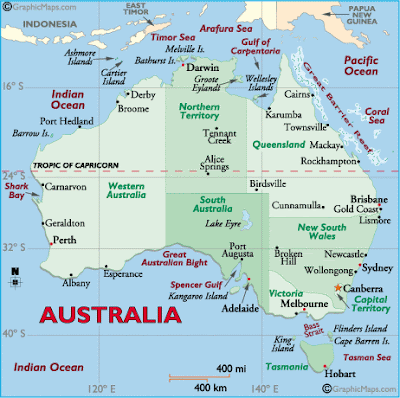
© www.graphicmaps.com
:::::::::::::::::::::::::::::::::::::::::::::::::::::::::::::::::::::::::::::::::::::::::::::::::::::
If this rate of cultural cross-pollination keeps up, the haiku may replace the bush ballad as Australia's preferred mode of poetic expression.
By Jaya Savige
October 03, 2007
OF the broader developments in recent Australian poetry, one of the more prominent has been an increasing engagement with the cultures and poetic traditions of Asia. Open a contemporary collection at random and you're likely to find a haiku or a pantoum sitting alongside a sonnet or a set of quatrains. In terms of content, Bombay buses and Cambodian cyclos jostle with scooters in St Kilda and roo bars in the Pilbara.
In Martial Arts, the compact movements of the martial artist are conceived as "deadly haikus/an art as convincing as any classic". The term classic here connotes both Eastern and Western traditions, and suggests the extent to which the poet is working at the nexus of the two.
The versatile haiku form has been employed by many contemporary Australian poets, from Janice Bostok to Ross Clarke and Bronwyn Lea, but there has not been a more perfect marriage of Australian content and Japanese form than the first of Sydney poet Jane Gibian's Summer Sequence, taken from her new collection, Ardent:
stepping carefully
between pointed gumnut caps --
your bare feet
Eschewing all poetic trickery, the basic aim of the haiku is to capture a precise (seasonal) moment with pristine lucidity; the dynamism is provided by the kireji, or turn, which functions much like the volta in a conventional sonnet.
Read more HERE
© www.theaustralian.news.com.au
:::::::::::::::::::::::::::::::::::::::::::::::::::::::::::::::::::::::::::::::::::::::::::::::::::::
Season Words (kigo) for Australia and New Zealand
Spring:
Bogon Moth
Blue Triangle butterfly, bluebottle (Graphium sarpedon choredon)
burning cane
crocodile mating season
Crocodiles live in the North of Australia.
They might be considered a TOPIC in other parts.
. . . (dry season in other areas of the world)
dragon lizards
Fathers Day, September
Melbourne Cup, Horse race
picnic
Royal Melbourne Show
sandflies
shearing
snapper run (at Port Phillip Bay)
Snail
'ti-tree in bloom' (tea tree, ti-tree, tee tree)
Water dragon Physignathus lesueurii
wattle, national wattle day
wattle ( acacia family of plants)
ooo ooo ooo ooo ooo ooo ooo ooo ooo ooo ooo ooo
Summer:
Australia Day (26th January)
Anniversary Day, Foundation Day, ANA Day, Day of Mourning, Survival Day . . .
BeachWorldwide. Surfing.
Bees, bumble bees
Blackboy seeds (Xanthorrhoeaceae plants) Grasstree
Boronia - "Heaven Scent"
Boxing Day Australia, New Zealand, UK
Bushfire, wildfire
Christmas in Australia
Santa Claus
Cockatoo
cricket game
cyclone
December, January, February in Australia
floods (this might rather be a topic)
Frangipani, Plumeria
haze [not spring]
lightning [not autumn]
Long days (hinaga), long nights (nagaki yo)
mirage
moon jelly, jellyfish (kurage in Japan)
New Year and January
Peppermint tree (Agonis flexuosa)
Pelican
Paperbark tree, Melaleuca honey myrtles, punk tree
sunbathing
surfing
swimming
water clears, clear water
windmill[not spring]
Withered plants (by the heat)
......................... The New Year
is a season of its own in Japan, because we celebrate for almost two weeks with many special ceremonies and customs, according to the Asian lunar calendar.
In Australia, related season words could simply be classified for the summertime.
First Sun, First Sunrise, year's first dawn of the New Year
ooo ooo ooo ooo ooo ooo ooo ooo ooo ooo ooo ooo
Autumn:
Anzac Day (25th April)
Australian Football League season begins
blues festival (Byron Bay)
burnback (to prevent bushfires) also done in winter
cassia (yellow flowering shrub)
clear sky
Mother's Day
tailor (saltwater fish)
ooo ooo ooo ooo ooo ooo ooo ooo ooo ooo ooo ooo
Winter:
bottlebrush, Aesculus parviflora
Long days (hinaga), long nights (nagaki yo)
Matariki, Maori New Year and Pleiades
New Zealand
:::::::::::::::::::::::::::::::::::::::::::::::::::::::::::::::::::::::::::::::::::::::::::::::::::::
Non-seasonal Haiku Topics:
we might find a season for them as we go :
Aborigines
Airlie Beach, Great Barrier Reef
Ant, Bulldog ant (Myrmecia)
Black Forest, Adelaide
Boomerang
bulldust (ブルダスト) (fine red desert dust)
Cane Toad
drought
drought is a very real thing in Australia, it is not seasonal, certainly not in the sense of annually recurring seasons. For there to be a drought declared, at least one year of poor rainfall in an area must happen. Victoria is at present (March 2009)in its 11th year of drought (officially).
dust storm
Great Barrier Reef
Emu
Eucalyptus trees blue gum tree, Eucalyptus globus et var.
Fat Tailed Dunnart
Flannel Flower
Goanna / Monitor Lizard
Hakea plant
Hangi feast New Zealand, Maori
Ibis
Iguana
Kakadu (National Park)
Kingfisher - Kookaburra
Koala
Kanguru, Kangaru (Kangoroo)
Lorikeet, Australian lorikeets (Trichoglossus haematodus) Rainbow lorikeets
Magpie, Piping Roller (Gymnorhina tibicen)
Platypus , duckbill, duck-mole
Possum, fam. Diprodontia
Snakes, Red-bellied Black Snake
Rimu tree, giant rimu Dacrydium cupressinum
Skink, blue-tongued skink skink family (Scincidae)
Sturt's Desert Pea
with lovely red flowers
Tasmanian wilderness
Uluru (Ayers Rock)
Waratah flower
Whipbird (Psophodes olivaceus)
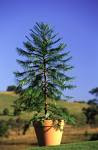
Wollemi Pine (Wollemia nobilis)
This special pine belongs to the Araucariaceae family and has been around for 200 million years !
Wombat
Yam and Yam Dreaming Traumzeit, dreamtime
:::::::::::::::::::::::::::::::::::::::::::::::::::::::::::::::::::::::::::::::::::::::::::::::::::::
External LINKs, general information
Animals of Australia with photos
Animals of Australia, Marsupials and others
Australia PhotosAnimals, Plants and more
Australian Slang
G'day, mate! Koala Net
Haiku Category Earth
Australia's landmass of 7,617,930 square kilometres (2,941,300 sq mi) is on the Indo-Australian Plate. Surrounded by the Indian and Pacific oceans, it is separated from Asia by the Arafura and Timor seas. The world's smallest continent and sixth largest country by total area,[108] Australia—owing to its size and isolation—is often dubbed the 'island continent' and variably considered the world's largest island.
© More in the WIKIPEDIA !
The Nullarbor Plain is part of the area of flat, almost treeless, arid or semi-arid country of southern Australia, located on the Great Australian Bight coast with the Great Victoria Desert to its north. The word Nullarbor is derived from the Latin nullus, "no", and arbor, "tree".
© More in the WIKIPEDIA !
:::::::::::::::::::::::::::::::::::::::::::::::::::::::::::::::::::::::::::::::::::::::::::::::::::::
:::::::::::::::::::::::::::::::::::::::::::::::::::::::::::::::::::::::::::::::::::::::::::::::::::::
FIRST AUSTRALIAN HAIKU ANTHOLOGY Book Review
Wollumbin Haiku Workshop, John Bird
Wollumbin Haiku Workshop, John Bird, 2006
Haiku Dreaming Australia
seeks to enlist wide recognition that southern hemisphere kigo is not always understood or given its true value, even by those of us who live here. This, to date, has been inevitable.
After all, haiku originated from northern hemisphere Japan – and with the exception of a few southern hemisphere visionaries such as Janice Bostok in the 1970s– it found its most empathetic following in countries which experienced similar seasonal experiences and their related flora and fauna.
Haiku Dreaming Australia
Editor : John Bird
There will never be a 'collection of Australian kigo', an Australian saijiki to which Australian poets adhere. Even a collection of agreed season words is unlikely.
... Not kigo. I suggest national-symbolic keywords.
But these keywords can not be prescribed; their usage can not be enforced; only future generations can decide if their effectiveness persists. They must be allowed to evolve from the work of many poets over a long period. And they will, they will, if we write and share haiku about Australia.
Read the full article here:
Coming Clean on Kigo
John Bird, July 2007
(I do not share this view of John Bird, but it is an imortant aspect of the Australian search for its own haiku and season words culture.
Gabi Greve)
:::::::::::::::::::::::::::::::::::::::::::::::::::::::::::::::::::::::::::::::::::::::::::::::::::::
(under the Southern Cross)
by Gábor Terebess: Haiku in the Luggage
:::::::::::::::::::::::::::::::::::::::::::::::::::::::::::::::::::::::::::::::::::::::::::::::::::::
The Australian Haiku Society
In December, 2000, Australian haiku enthusiasts banded together to form HaikuOz
* to promote enjoyment of haiku within Australia,
* to bring Australian writers to the world haiku community.
The Australian Haiku Society would not have come into being without the tireless and thorough efforts of its founder and first contact officer and inaugural web manager, John Bird. Haiku Oz gratefully acknowledges its debt to his vision, passion and expertise in drawing Australian haijin together to create the online haiku community that it is today.
Patron: Janice M. Bostok
President: Beverley George
Vice-President: Lyn Reeves
http://www.haikuoz.org/about_haikuoz/
First Australian Haiku Anthology
Spinifex: haiku
by Beverley George
ISBN 0 957843609 0
published by Pardalote Press
Between October, 2008 and March, 2009 HaikuOz published 74 responses by 71 poets (57 Australian) to the question, What is haiku?.
What is Haiku? - personal reflections
John Bird, April 2009
.................................................................................
HaikuOz: Haiku in Australia 2010
Haiku groups
As in Japan, small groups are at the heart and soul of Australian haiku writing. These are poems of observation, so it is fitting the groups are regionally based, allowing members to share urban or rural landscape.
These groups include Cloudcatchers (Northern NSW, led by Quendryth Young); Bindii Haiku Group (Adelaide, led by Lynette Arden); Mari Warabiny (Perth, led by Maureeen Sexton) Red Dragonflies (Sydney, led by Vanessa Proctor); Watersmeet (Hobart, led by Lyn Reeves) and Ozku (Sydney, led by Dawn Bruce.) The ‘paper wasp’ group (Brisbane led by Katherine Samuelowicz) is currently not meeting regularly but it is hoped that this will resume soon. It is not unusual for groups to go a little quiet and then reinvent themselves.
In Melbourne, Myron Lysenko conducts haiku walks ‘Ginko with Lysenko’ four times a year.
Beverley George
source : www.haikuoz.org/2010/09
.................................................................................
Australian Haiku BLOG
EMMA DALLOWAY
ooo ooo ooo ooo ooo ooo ooo ooo ooo
Eucalypt:
An Australian tanka journal appearing in May and in November each year.
ooo ooo ooo ooo ooo ooo ooo ooo ooo
Australian Haiku Poets and Authors
A growing LIST.
Watersmeet haiku group
Watersmeet is a group of people in Hobart who write and share haiku.
All Watersmeet members have had haiku published in a wide variety of print and on-line journals. Some have won prizes and commendations for their haiku and haiku-related works.
ROOKU
Rooku is an Australian variant of the short Japanese form called haiku, but without the usual rules. Rooku also lends itself to humour. Rooku has an Australian bent, and is more relaxed in structure.
It is a poetic snapshot of a moment in time.
Myron Lysenko
Rooku Troupe (Melbourne haiku poets Lia Hills, Matt Hetherington and Myron Lysenko) in conjunction with Connex Trains and The Committee for Melbourne.
Moving Galleries
:::::::::::::::::::::::::::::::::::::::::::::::::::::::::::::::::::::::::::::::::::::::::::::::::::::
where children play
the words of Mao
whitewashed
Read more here :
WATCHING PILGRIMS, WATCHING ME
An interview with Jodie Hawthorne
:::::::::::::::::::::::::::::::::::::::::::::::::::::::::::::::::::::::::::::::::::::::::::::::::::::
Hot Cross Haiku
Hot Cross Haiku serves tasty and thoughtful haiku by !an and authors from around the world. Baked daily in Melbourne, Australia, these haiku are best served warm and buttered.
http://hotcrosshaiku.blogspot.com/
:::::::::::::::::::::::::::::::::::::::::::::::::::::::::::::::::::::::::::::::::::::::::::::::::::::
Tasmania

Tasmania is an Australian island and state of the same name. It is located 240 kilometres (150 mi) south of the eastern side of the continent, being separated from it by Bass Strait.
© More in the WIKIPEDIA !
Pardalote Press
Pardalote is committed to publishing poetry, especially poetry with a Tasmanian connection,
... publishes contemporary poetry, haiku and haiku related forms, and translations of ancient Chinese poetry with bilingual text..."
http://www.pardalote.com.au/
:::::::::::::::::::::::::::::::::::::::::::::::::::::::::::::::::::::::::::::::::::::::::::::::::::::
New Zealand

New Zealand is an island country in the south-western Pacific Ocean comprising two main landmasses (the North Island and the South Island), and numerous smaller islands, most notably Stewart Island/Rakiura and the Chatham Islands.
© More in the WIKIPEDIA !
New Zealand Kigo - to use or not to use?
By Vanessa Proctor
New Zealand Haiku Magazines
Bravado:
published three times a year and may include haiku, along with poetry, short stories and articles.
Submit: Poetry Editor Tim Upperton
Kiwihaiku:
Is published bi-monthly in the NZ Poetry Society newsletter. Haiku submitted should have a distinct New Zealand flavour.
Submit: Editor Barbara Strang
Kokako:
published twice a year, and includes haiku, senryu, tanka, renga and related forms.
Editors: Owen Bullock, Patricia Prime
Valley MicroPress:
published 10 times a year.
Submit: Editor Tony Chad
New Zealand Poetry Society.
More is here.
Glossary of New Zealand Terms
Another Glossary for The Haiku Foundation, April 2012
Per Diem feature
Cabbage tree: Cordyline australis
Magpie: The Australian magpie (Cracticus tibicen)
Pohutukawa: Metrosideros excelsa flower
Tui: Prosthemadera novaeseelandiae, bird
Wax-eye: Zosterops lateralis, bird
and many more
Glossary of New Zealand Terms
:::::::::::::::::::::::::::::::::::::::::::::::::::::::::::::::::::::::::::::::::::::::::::::::::::
Welcome to the showcase of haiku by some of the best writers in New Zealand.
wedding day
the pear tree
sheds petals
- Barbara Strang
admires the new handbag
on the window sill
then Rangitoto's Fuji
- Bernard Gadd
with an index of all poets
. © HAIKU NZ SHOWCASE
:::::::::::::::::::::::::::::::::::::::::::::::::::::::::::::::::::::::::::::::::::::::::::::::::::::
Jeanette Stace (1917 – 2006)
low tide
I walk to you
across the sky
On 2nd October Jeanette Stace died peacefully. She was one of New Zealand's leading haiku poets and made a contribution to English language haiku, not only through her own poetry, but also by encouraging others to write and enjoy haiku.
She received many awards for her work, but was always modest about her achievements. Jeanette was an invaluable member of the New Zealand Poetry Society committee for many years.
:::::::::::::::::::::::::::::::::::::::::::::::::::::::::::::::::::::::::::::::::::::::::::::::::::
Topics from NZ
Christchurch Cathedral
:::::::::::::::::::::::::::::::::::::::::::::::::::::::::::::::::::::::::::::::::::::::::::::::::::::
[ . BACK to WORLDKIGO . TOP . ]
:::::::::::::::::::::::::::::::::::::::::::::::::::::::::::::::::::::::::::::::::::::::::::::::::::::


 Posts
Posts


6 comments:
Welcome, Australia Saijiki!
This page is already impressive -- and ambitious too. Enjoy building up the saijiki, and drop in on Kenya Saijiki from time to time!
Isabelle Prondzynski.
::::::::::::::::::::::::::::::::::::::::::::::::::::::::::::::::::::::
Discussing kigo and haiku topics from Kenya
This might be of interest for the Australian Kigo Discussion too.
::::::::::::::::::::::::::::::::::::::::::::::::::::::::::::::::::::::
豪州の陽
虫も飛び入る
サングラス
Australian sunshine
even a bug rushes
into sunglasses
gooshuu no hi
mushi mo tobiiru
sangurasu
.
Chie Chilli Umebayashi
A flutter of ideas
Nothing new under the Sun
The howling Autumn wind
Appreciate this blog ppost
I find this project fascinating as I'm always interested in learning about different cultural perspectives on seasons.
Post a Comment